RC Transmitters: The Gimbal Specs You Feel Every Flight
Updated 2026-08-30 · By the SpecRiot Editors
An RC transmitter is the radio in your hands that turns stick inputs into control commands, and it is the one piece of gear you touch every single time you fly or drive. What you are buying is gimbal quality and protocol, not channel count alone. Gimbal type. Protocol. Channels. Build quality. Here is what separates transmitters that feel precise from transmitters that feel like toys. As one pilot put it: "Your transmitter is the only part of the hobby you hold every time. Cheap gimbals are like cheap shoes: you feel them by hour two."
As an Amazon Associate, I earn from qualifying purchases. SpecRiot is reader-supported. No paid placements. No press samples. No manufacturer relationships.Full disclosure.
What Actually Matters When You Compare Rc Transmitters
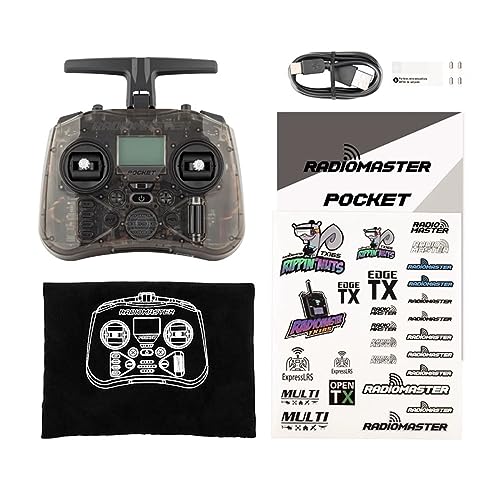
Gimbal quality:Hall sensor gimbals (TX16S, Pocket) are smooth, precise, and never wear out. Potentiometer gimbals (FS-i6) drift with age. Gimbals are the entire feel of the radio. Spend here first.
Protocol:ELRS (ExpressLRS) is the modern open protocol with long range and low latency. Multi-protocol modules (TX16S) bind to nearly everything. Protocol is the language your radio speaks to your receiver. Make sure both speak it.
Channels:16 channels (TX16S) cover complex planes and quads with room for modes and switches. 6 channels (FS-i6) suit simple builds. Channels are the switches and functions you can control, not just the sticks.
OpenTX / EdgeTX:EdgeTX and OpenTX software (TX16S) give mixes, curves, and voice at a level no stock radio matches. The software is the difference between a radio and a computer with sticks.
The Bottom Line: The TX16S is the do-everything transmitter: hall gimbals, EdgeTX, and multi-protocol support at a price that beats the flagships it competes with. It is the radio you buy once and fly everything with, from whoops to 2-meter gliders.
The Bottom Line: The Pocket is hall-gimbal EdgeTX at a budget: the feel and software of the big radios in a case that fits your jacket. It is the radio that makes ELRS cheap enough to recommend to everyone.
The Bottom Line: The FS-i6 is the budget first radio: a receiver-included classic that gets beginners airborne without breaking the hobby budget. It is the radio you start with, learn on, and outgrow with fond memories.
ExpressLRS offers longer range, lower latency, and an open ecosystem. FlySky AFHDS is older but works with its own receivers. New builds go ELRS. Budget bind-and-fly kits often ship FlySky.
Do I need a transmitter with a screen?
A color touchscreen (TX16S) makes setup and telemetry nicer. Monochrome screens do the job at a lower price. The screen is comfort. The gimbals and software are the radio.
Can I use a transmitter with a simulator?
Most modern radios work with sims over USB or trainer ports. Practicing on a sim with your real transmitter is the fastest way to improve, and it is free after the radio.