A PC USB logic analyzer is a small device that records digital signals, the 0s and 1s on your pins, and streams them to software on your computer. What you are buying is sample rate and protocol decoding. Channel count. Memory depth. Software quality. Here is what separates tools that decode SPI in seconds from boxes that choke on a burst of I2C. As one firmware developer put it: "An oscilloscope shows you a waveform. A logic analyzer shows you a conversation. You cannot debug an argument by watching one person's lips."
As an Amazon Associate, I earn from qualifying purchases. SpecRiot is reader-supported. No paid placements. No press samples. No manufacturer relationships.Full disclosure.
What Actually Matters When You Compare Logic Analyzers
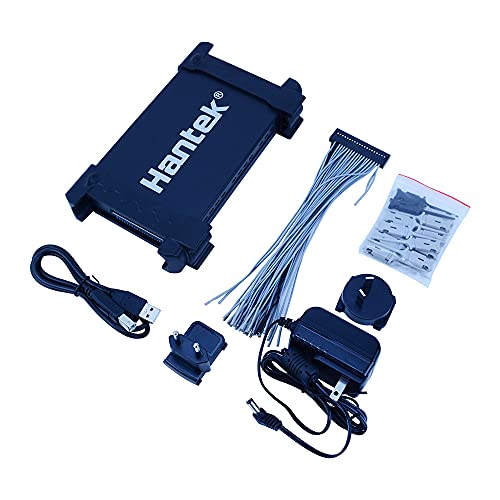
Channel count:8 channels (Saleae Logic 8) covers common buses: SPI, I2C, UART, plus debug pins. 16 channels (DSLogic Plus) handles parallel buses and more probes. 32 channels (Hantek 4032L) is for serious parallel work. More channels means less re-clipping.
Sample rate and bandwidth:Max sample rate determines how fast a signal you can capture. 100-500 MSa/s covers MCU and FPGA work. Bandwidth (the Hantek 4032L at 150MHz) sets the fastest reliable signal. Higher is better, but only if the software can handle the data.
Memory depth:Buffer size decides how long you can record before it overflows. 2Gbit (Hantek 4032L) records long traces. 256Mbit (DSLogic Plus) is enough for most debugging. Short buffers miss the bug that happens once.
Software: The software is half the tool. Saleae Logic software is the gold standard: protocol analyzers for dozens of buses, clean UI. DSView (DSLogic) is open-source and capable. Hantek bundles its own suite. Check the protocol decoders before you buy.
Logic Analyzers: Compared By Published Specs
Best Overall
★★★★★ 9.2/10
Saleae Logic 8 Logic Analyzer
Saleae Logic 8 (8ch, 500 MSa/s, Logic software)
Channels
8
Max sample rate
500 MSa/s
Bandwidth
100 MHz+
Buffer
Streams to host memory
Protocols
50+ in Logic software
OS
Windows, macOS, Linux
Interface
USB 3.0
Price
Under $500
What Works
Best-in-class Logic software
Streaming capture with deep memory
50+ protocol analyzers
Cross-platform, zero driver pain
Sleek, portable hardware
The Catch
Premium price
8 channels max on this model
Software is free, but the hardware is not cheap
The Bottom Line: The Saleae Logic 8 is the logic analyzer every firmware engineer ends up with. The Logic software alone, with 50+ protocol analyzers and streaming capture, is worth the price of admission. Eight channels covers most debugging, and the cross-platform drivers just work. It is the definition of buy once, cry once. A firmware engineer: "I have owned three logic analyzers. I use the Saleae, and the other two live in a drawer."
The Bottom Line: The Hantek 4032L is the channel monster of the mid tier: 32 channels, 150MHz bandwidth, and 2Gbit of capture memory for under $300. The bundled software is Windows-only and dated, which is the real cost of the hardware deal. For parallel buses and long protocol traces, it is the value king. A bench tech: "The software is clunky, but nothing else at this price records this much for this long."
DSLogic Plus (16ch, 400 MSa/s, open-source DSView)
Channels
16
Max sample rate
400 MSa/s
Bandwidth
100 MHz+
Buffer
256 Mbit
Protocols
50+ in DSView
OS
Windows, macOS, Linux
Interface
USB 2.0
Price
Under $170
What Works
16 channels for the price of budget 8s
Open-source DSView with rich decoders
Cross-platform support
Metal housing feels solid
The Catch
256Mbit buffer fills fast at high rates
DSView takes time to learn
Accessories sold separately
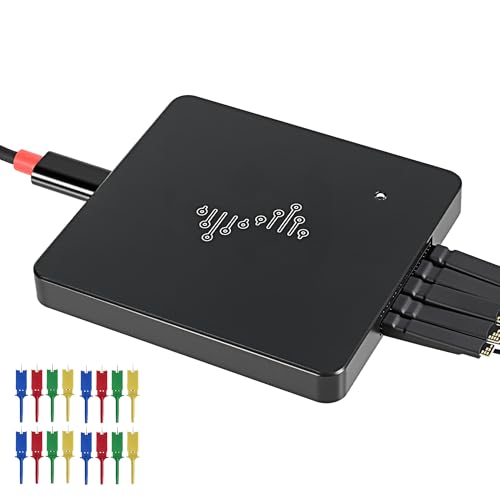
The Bottom Line: The DSLogic Plus is the smart money play: 16 channels at 400 MSa/s with the open-source DSView software for under $170. The buffer is smaller than the Hantek 4032L, and DSView has a learning curve, but the price-to-channels ratio is unbeatable. A maker: "For the price of a dinner out, I got a tool that decodes SPI, I2C, and UART like a much more expensive box."
Logic analyzer vs oscilloscope: what is the difference?
A logic analyzer records digital 0/1 states across many channels and decodes protocols. An oscilloscope shows analog voltage over time on a few channels. Protocol debugging is logic analyzer territory. Signal integrity is scope territory.
How many channels do I need for debugging MCUs?
8 channels covers SPI (4 pins), I2C (2 pins), and UART (2 pins) with room for triggers. 16 channels adds parallel buses and debug lines. Most hobby and pro work starts at 8 and grows to 16.
Can I use a cheap logic analyzer for serious work?
Yes, with limits. A 24MHz 8-channel unit decodes slow I2C, UART, and SPI fine. Fast buses, high sample rates, and long captures need 100MSa/s+ and real memory depth. Match the tool to the bus speed.