Fume Extractors: The CFM Spec That Keeps Your Lungs
Updated 2026-08-30 · By the SpecRiot Editors
A soldering fume extractor pulls the smoke from your iron tip and traps it in a filter before it reaches your lungs. What you are buying is filter media and airflow, not a fancy fan. Activated carbon. Coverage area. Noise level. Filter replacement cost. Here is what separates the units that clear a bench from the ones that just rearrange the smell. As one electronics instructor put it: "Flux smoke is your bench quietly billing you for every joint you soldered. A fume extractor is the payment plan."
As an Amazon Associate, I earn from qualifying purchases. SpecRiot is reader-supported. No paid placements. No press samples. No manufacturer relationships.Full disclosure.
What Actually Matters When You Compare Fume Extractors
Filter media:Activated carbon absorbs the volatile organics in flux smoke. The Hakko FA400-04 uses layered carbon filtration; budget fans often use a single thin pad. Carbon weight is the real spec.
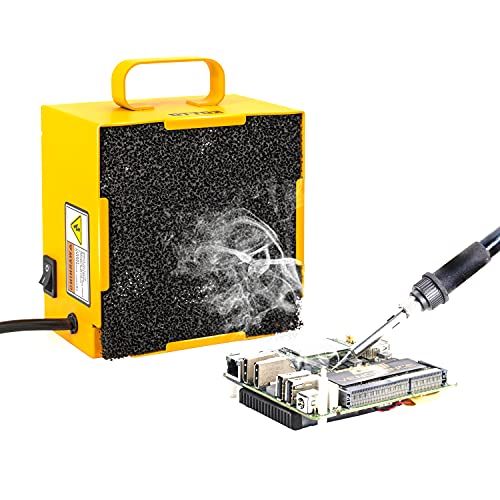
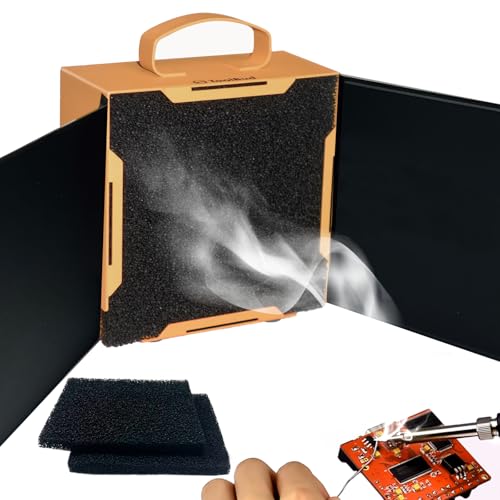
Airflow and coverage: Look at how much air the fan moves and where it pulls from. A tiltable fan (KOTTO, ToolBud) covers a larger work area than a fixed-angle unit. You want the smoke traveling toward the filter, not around it.
Filter replacement: Filters are the subscription. Hakko FA400-04 uses standard carbon pads that are easy to source. Some budget units use odd-size filters that are harder to find than the extractor itself.
Noise level: An extractor runs the whole time you solder. Quiet fans at low speed beat loud fans you turn off. A fume extractor you switch off is a paperweight with a propeller.
The Bottom Line: The Hakko FA400-04 is the fume extractor every electronics classroom reaches for first. Two speeds, a quiet fan, and tool-free carbon filter swaps make it the low-drama choice for a bench that runs all day. It only covers one iron at a time, and the filters do cost money. That is the trade for reliable, honest filtration. A lab manager: "Students abuse these for years. We replace the filters, not the units."
The Bottom Line: The KOTTO Solder Smoke Absorber is the default first extractor for a reason: it is cheap, adjustable, and ships with spare filters. The single speed is louder than you want for long sessions, and the carbon load is lighter than the Hakko FA400-04. For a hobby bench that solders a few hours a week, it is the sensible standard. A reviewer: "It is not the last extractor you will ever buy. It is the first one that makes you realize you needed one."
The Bottom Line: The ToolBud is the cheapest real extractor on the bench: it moves air, holds a carbon pad, and the magnetic flaps help aim it. The fan is small and the filter is thin, so treat it as smoke deflection, not full filtration. It is the right buy when the alternative is nothing. A buyer: "For under $30 it pulls the smoke away from my face while I learn to solder. When I get serious, I will get serious."
They reduce exposure to flux fumes, which contain volatile organics linked to respiratory irritation. A carbon-filter extractor lowers what you breathe; it does not eliminate it. Work in a ventilated room and point the airflow away from you.
HEPA or carbon: which do I need for soldering?
Carbon absorbs the organic vapor from flux. HEPA catches particles. For hand soldering, carbon is the essential layer. HEPA matters more for processes that generate particulate, like laser engraving. For a soldering bench, buy carbon first.
How often should I replace fume extractor filters?
Depends on volume. A hobbyist bench can run a carbon filter for months. Daily production can exhaust it in weeks. When airflow drops or the smell returns, the filter is done.