FPV Goggles: The Latency Specs That Put You In The Drone
Updated 2026-08-30 · By the SpecRiot Editors
FPV drone goggles put a live video feed from your quad directly in front of your eyes, and they are the single biggest immersion upgrade between a screen and a cockpit. What you are buying is latency and image quality, not a bigger screen. Video system. Latency. Resolution. Field of view. Here is what separates goggles that feel like flying from goggles that feel like watching a laggy phone. As one pilot put it: "Goggles do not show you the flight. They put you in it. Everything else is just a screen at the end of a stick."
As an Amazon Associate, I earn from qualifying purchases. SpecRiot is reader-supported. No paid placements. No press samples. No manufacturer relationships.Full disclosure.
What Actually Matters When You Compare Fpv Goggles
Video system:HD digital systems (DJI O4, Walksnail Avatar) deliver crisp 1080p+ with low latency. Analog systems (EV800D) are simpler, cheaper, and nearly latency-free but soft. The video system decides what your eyes see, and your eyes decide how brave you fly.
Latency:Sub-30ms latency (DJI, Walksnail) keeps the feed locked to your inputs. Analog sits around 10-20ms. Latency is the spec that turns "flyable" into "fun".
Resolution and panel:Micro-OLED panels (DJI Goggles 3) deliver deep blacks and 1080p per eye. LCD screens (Walksnail L) are solid but lighter on contrast. OLED is the difference between flying at dusk and flying in a movie.
Field of view and fit:50°+ FOV fills your peripheral vision. Adjustable IPD and diopters matter for long sessions. A goggle that does not fit your face is a goggle you will not wear.
The Bottom Line: The DJI Goggles 3 are the reference HD goggles for the DJI O4 ecosystem: Micro-OLED image quality, ultra-low latency, and diopter adjustment in one package. As one pilot put it: "The first flight through these goggles ruined every other screen for me."
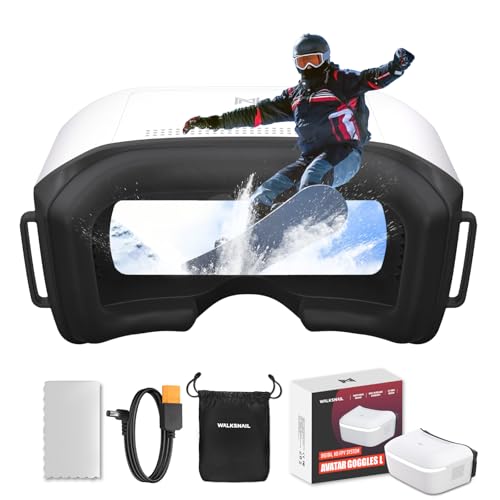
Walksnail Goggles L (1080p LCD, head tracking, compact)
Video system
Walksnail Avatar HD
Panel
1080p LCD, 4.5-inch
Latency
Low, Avatar HD
Head tracking
Yes
Compatibility
Walksnail VTX kits
Input
HDMI/AV supported
Form factor
Compact, face-hugging
Price
Under $250
What Works
Walksnail HD at a mid price
Compact face-hugging form
Head tracking included
Works with the open Avatar ecosystem
The Catch
LCD contrast trails OLED
Walksnail ecosystem only
No built-in diopters
The Bottom Line: The Walksnail Goggles L are the open-ecosystem HD answer: 1080p, head tracking, and a compact form that works with any Walksnail VTX. It is the best path to HD if you are not married to DJI.
The Bottom Line: The EV800D is the "fly FPV for the price of a video game" goggle: analog, boxy, and dependable. You will outgrow it. You will never regret buying it.
HD digital (DJI, Walksnail) looks incredible and costs more. Analog is cheaper, simpler, and virtually latency-free. Budget for the quad first. Goggles grow with you, so buy the best system you can afford.
Will any goggles work with any drone?
No. DJI goggles need DJI O3/O4 air units. Walksnail goggles need Walksnail VTX. Analog goggles work with any analog video transmitter. Match the video system, not the brand of the frame.
How much latency is acceptable for FPV?
Under 30ms feels locked in for freestyle and racing. Above 50ms you start fighting the controls. Analog wins raw speed. Modern HD is close enough that most pilots cannot tell.