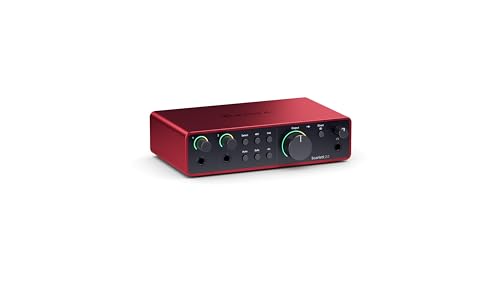
Audio Interfaces: The Preamps That Decide Your Sound
Updated 2026-08-30 · By the SpecRiot Editors
A USB audio interface is the box that turns microphones and instruments into signals your computer can record, and it is the single highest-leverage upgrade for any home studio. What you are buying is converter quality and preamp headroom, not channel count. Dynamic range. Preamplifier gain. Latency performance. Phantom power. Here is what separates the interfaces that make a budget mic sound like a premium one from the ones that flatten everything into digital cardboard. As one studio engineer put it: "An interface is the glass your signal passes through. Cheap glass adds no color, it just smears the picture."
As an Amazon Associate, I earn from qualifying purchases. SpecRiot is reader-supported. No paid placements. No press samples. No manufacturer relationships.Full disclosure.
What Actually Matters When You Compare Audio Interfaces
Converter dynamic range:120dB dynamic range (MOTU M2) means quiet passages stay quiet and loud peaks stay clean. 115dB or less (Scarlett 2i2 4th Gen) is still professional. The noise floor is where cheap interfaces get caught.
Preamplifier gain and quality:Preamps need enough clean gain for dynamic and ribbon mics. The MOTU M2 and Scarlett 2i2 deliver 60dB+ of usable gain. Midas-designed preamps in the UMC22 punch far above its price. Gain is headroom. Headroom is forgiveness.
Latency and drivers:Round-trip latency under 10ms at 44.1kHz feels instant when monitoring. The MOTU M2 ships 2.4ms at 44.1kHz with its own driver. Class-compliant USB interfaces (UMC22) work everywhere but carry higher latency. Latency is the difference between playing and waiting.
Build, outputs, and routing: Look for dedicated monitor outputs, a headphone amp that can drive real headphones, and direct monitoring so you hear yourself with zero delay. MIDI I/O on the M2 and 2i2 removes a separate USB cable. Every jack you do not need is a jack you are not paying for.
Audio Interfaces: Compared By Published Specs
Best Overall
★★★★★ 9.2/10
MOTU M2
MOTU M2 (2x2, ESS Sabre DAC, 120dB dynamic range)
Channels
2 in / 2 out
Dynamic range
120dB (ESS Sabre DAC)
Preamp gain
60dB, low-noise
Latency
2.4ms round-trip at 44.1kHz
Inputs
2x combo XLR/TRS + MIDI I/O
Phantom power
+48V per channel
Loopback
Yes, for streaming
Price
Under $200
What Works
ESS Sabre converters beat interfaces twice the price
Lowest round-trip latency in this class
Bright OLED metering is genuinely useful
MIDI I/O removes a USB cable
The Catch
Metal chassis, but knobs feel light
Power supply is external
No built-in DSP effects
The Bottom Line: The MOTU M2 is the interface engineers recommend when they stop pretending price matters. The ESS Sabre converters and 120dB dynamic range make it the quietest, most honest box under $200. As one recordist put it: "The M2 made my old interface sound like a walkie-talkie. I checked the specs first. Then I checked it twice."
Scarlett 2i2 4th Gen (2x2, Air mode, 24-bit/192kHz)
Channels
2 in / 2 out
Dynamic range
115dB DAC
Preamp gain
69dB, Air mode switch
Sample rate
24-bit / 192kHz
Inputs
2x combo XLR/TRS
Phantom power
+48V per channel
Loopback
Yes
Price
Under $250
What Works
Proven reliability across millions of units
Air mode brightens dynamic mics
Plug-and-play on Mac, Windows, iPad
Bigger knobs, better layout than 3rd Gen
The Catch
No MIDI I/O on the 2i2
DAC spec trails the MOTU M2
Software bundle is useful, not thrilling
The Bottom Line: The Scarlett 2i2 4th Gen is the default for a reason. It is reliable, easy, and good enough for professional work, which is why it sits on more desks than any rival. It is not the best-sounding box in this list. It is the least-surprising one.
The Bottom Line: The UMC22 is the "try before you commit" interface. It gets a real condenser mic into a computer cleanly for the price of a dinner out. It will not be your final interface. It is the perfect first one.
A USB mic has a tiny built-in interface that is good enough for podcasts. An audio interface unlocks XLR mics, instrument recording, and better converters. If you only ever talk, a USB mic is fine. If you record music or voiceover seriously, the interface wins.
What is the difference between 44.1kHz and 96kHz?
44.1kHz is CD quality and covers nearly everything. 96kHz gives more headroom for heavy processing but costs more disk space and CPU. Nobody can hear the difference in the final mix. Buy based on preamps and converters, not sample rate.
Can I use an interface with an iPad or phone?
Many modern interfaces are class-compliant, so they work with iPad and Android via USB-C, sometimes with a powered hub. Scarlett 2i2 4th Gen and MOTU M2 both work with iPad. Check the power draw before you promise yourself a mobile studio.