Steam Cleaners: The Boiler Specs That Dissolve Grime
Updated 2026-08-30 · By the SpecRiot Editors
Steam cleaners blast pressurized dry steam at high temperature to dissolve grease and grime without chemicals, and the spec that decides whether yours actually cleans or just mists is boiler wattage and steam pressure. What you are buying is chemical-free cleaning power. Boiler wattage. Steam temperature. Pressure. Water capacity. Here is what separates the machines that strip grills and grout in minutes from the ones that fog the kitchen. As one cleaning contractor put it: "Steam does not push dirt around. It makes dirt let go."
As an Amazon Associate, I earn from qualifying purchases. SpecRiot is reader-supported. No paid placements. No press samples. No manufacturer relationships.Full disclosure.
What Actually Matters When You Compare Steam Cleaners
Boiler wattage:1500W and up sustains steam for long sessions. Higher wattage means faster heat-up and steadier pressure. Wattage is stamina.
Steam temperature:300 F+ dry steam dissolves grease and lifts grime fast. Cooler steam leaves surfaces damp and slow to clean. Temperature is cleaning power.
Pressure:PSI rating drives steam into cracks, grout lines, and grill grates. Higher pressure reaches what a rag cannot. Pressure is reach.
Water capacity:Larger tanks run longer between refills, and continuous-fill designs never stop. Capacity is session length.
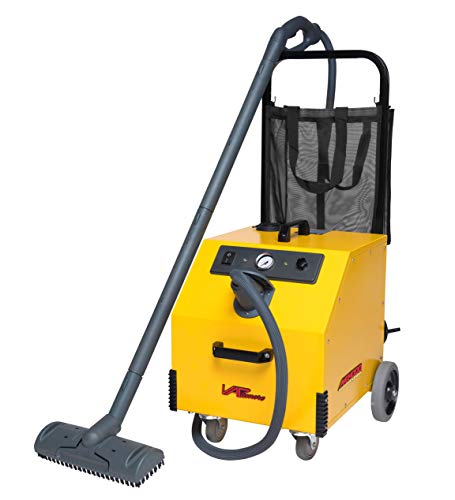
The Bottom Line: The Vapamore MR-1000 Forza is the commercial flagship with a 1900W boiler, a 3 gallon tank, and a 50-tool arsenal. "It replaced three cleaning products and a bucket of elbow grease."
The Bottom Line: The Vapamore MR-750 Ottimo is the mid-tier workhorse that brings dry steam control and a real tool kit to small commercial spaces. "It deep-cleaned our tile grout with zero chemicals."
The Bottom Line: The Hapyvergo 1700W is the value entry that proves chemical-free steam cleaning does not need a commercial budget. "It made our kitchen grout look new again."
Is a steam cleaner worth it for commercial cleaning?
For grease, grout, and grills, steam cleaners replace chemical sprays and scrub time. The boiler wattage decides how much work it can sustain. Match the machine to the job size.
What surfaces can a steam cleaner handle?
Tile, grout, stainless steel, grills, upholstery, and sealed hard floors all respond well. Avoid unsealed wood and delicate electronics. Steam is powerful, so read the surface.
Do steam cleaners need cleaning chemicals?
No. Pressurized high-temperature steam is the cleaner. That is the entire point. No bottles, no fumes, no residue.